
Lektion 6 – Saison- & Stressmanagement – Hitze, Wind, Regen/Abdeckung, Urlaub & Indoor-Übergang (fundiert & sehr ausführlich)
Lernziele dieser Lektion
Nach dieser Lektion kannst du …
- deinen Balkon-Garten an Hitze und Wind anpassen, ohne Chaos
- verstehen, wie Regen/Überdachung deine Pflege verändert
- einen Urlaubsplan (1–7 Tage) erstellen (realistisch, ohne High-Tech-Zwang)
- Stresssignale erkennen, bevor Pflanzen „kippen“ (Profi-Prävention)
- Übergänge managen: Saisonwechsel, Rückschnitt/Abbau, (optional) Indoor-Fensterbank
- eine „Wenn–Dann“-Strategie nutzen, damit du nicht jedes Mal neu überlegen musst
Basis: Container sind wetterabhängig und trocknen schneller aus. Deshalb muss Pflege saisonal angepasst werden.
Stress ist normal – aber er muss „kontrolliert“ bleiben
Pflanzen erleben Stress. Auf Balkonen sogar häufiger, weil:
- Töpfe sich schnell aufheizen
- Wind und Sonne Verdunstung erhöhen
- Substratvolumen begrenzt ist
- Regen/Überdachung Wasser stark verändert
Stress wird problematisch, wenn er:
- dauerhaft ist
- oder ständig zwischen extrem trocken und extrem nass schwankt
Merke dir: Dein Ziel ist nicht „Null Stress“, sondern stabile Bedingungen mit kleinen, kontrollierten Schwankungen.
Hitze-Management (Sommer) – ohne Giess-Panik
Was Hitze im Topf wirklich macht
- erhöht Verdunstung (Pflanze + Substrat)
- kann Wurzeln überhitzen (Topfmaterial/Farbe spielt mit)
- verstärkt Salzstress, wenn Substrat austrocknet und dann gedüngt wird
- bei Blattpflanzen: erhöht Risiko von „Schiessen“ (Blüten statt Blatt)
In warmem Wetter müssen Container häufiger geprüft und ggf. öfter gegossen werden.
Profi-Strategie bei Hitze: “Check öfter, giesse nicht blind”
Viele Menschen reagieren auf Hitze mit „jeden Tag mehr Wasser“. Profis machen:
- häufiger prüfen (Fingerprobe/Topfgewicht)
- gründlich giessen, wenn trocken, nicht „Mini-giessen“
- abtropfen lassen, Untersetzer kontrollieren
Drei „Hitze-Hacks“ (low-tech, sehr effektiv)
Hack 1: Topfposition minimal optimieren
- nicht komplett in Schatten stellen (sonst fehlt Energie)
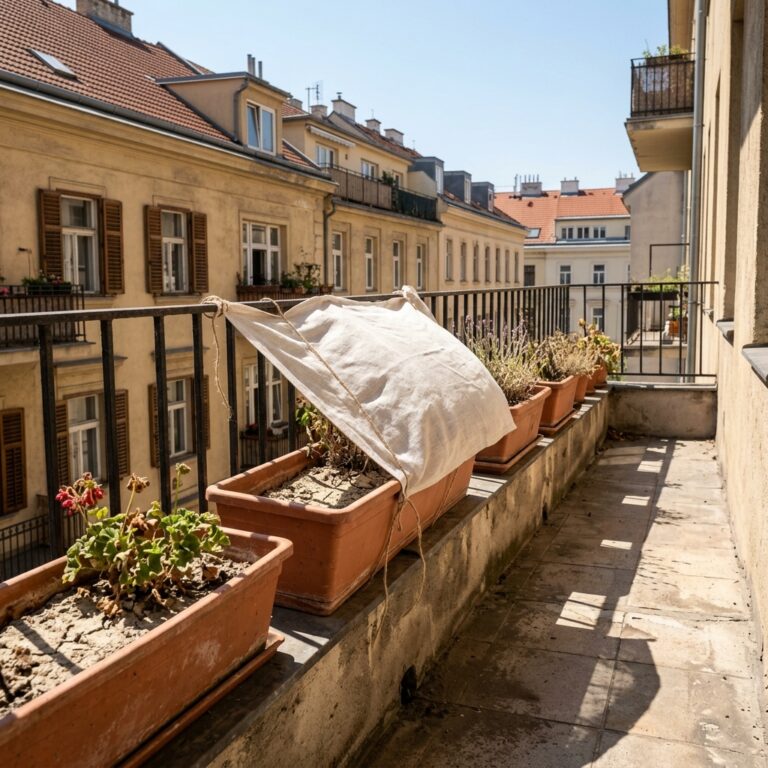
- aber bei extremer Mittagshitze: 1–2 Stunden weniger direkte Sonne können Blattpflanzen retten
- besonders hilfreich für Salat/Rucola und empfindliche Kräuter
Hack 2: Oberfläche schützen (Verdunstung bremsen)
- leichte Abdeckung/Mulch (dünn) kann Verdunstung reduzieren
- Ziel: weniger extreme Schwankung, nicht „nass halten“
Hack 3: Volumen bevorzugen
- grössere Töpfe puffern Hitze und Wasser besser und grössere Gefässe sind in der Pflege oft einfacher (mehr Puffer).
Hitzestress vs. Wassermangel (nicht verwechseln!)
Hitzestress: Pflanze hängt mittags, erholt sich abends/morgens → nicht blind übergiessen.
Wassermangel: Erde trocken in der Tiefe, Topf leicht → gründlich giessen.
Wind-Management – der „unsichtbare Durst“
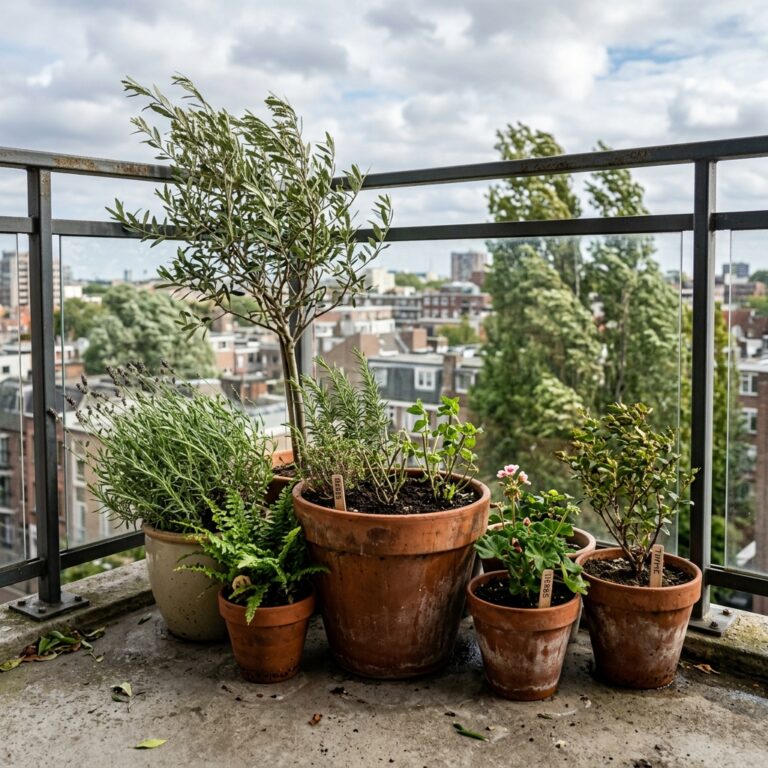
Wind ist wie ein Haartrockner:
- erhöht Verdunstung
- trocknet Substrat schneller
- kann Pflanzen mechanisch stressen (Risse, Knicken, Kippen)
Profi-Strategien:
- Stabilität zuerst
- breite, schwere Gefässe
- Hauptpflanze nicht randnah
- Windschutz
- Pflanzen/Regal als Schutz
- Position „hinter“ Brüstung nutzen
- Pflege anpassen
- häufiger prüfen, nicht zwangsläufig mehr giessen
- temporäre Begleiter in Ein-Topf rechtzeitig ernten (weniger Blattmasse = weniger Verdunstung)
Containerpflege ist wetterabhängig; Wind erhöht Pflegebedarf.
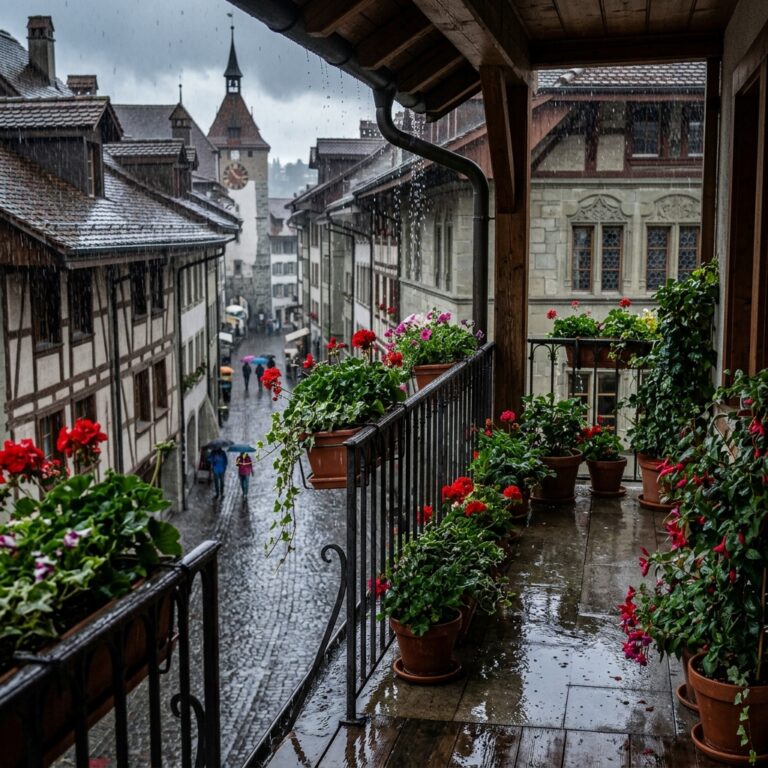
Regen & Überdachung – warum zwei Balkone völlig verschieden sind
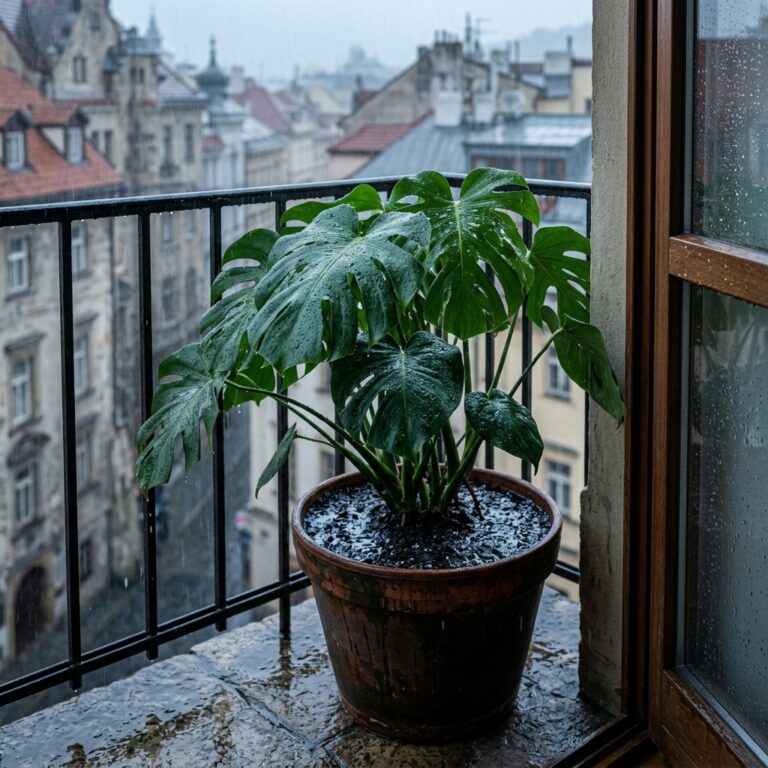
Offener Balkon (viel Regen möglich)
Risiko: Du denkst, Regen reicht – aber oft befeuchtet Regen nur die Oberfläche, während tieferes Substrat trocken bleibt (oder umgekehrt nach Starkregen zu nass wird).
Profi: Nach Regen trotzdem prüfen (Fingerprobe).
Überdachter Balkon (wenig natürlicher Regen)
Konsequenz: Du bist die Wasserquelle.
Vorteil: Blattwerk bleibt oft trockener → Pilzdruck kann geringer sein (bei guter Luft).
Profi: Routine ist hier besonders wichtig, weil Regen dich nicht „rettet“.
Urlaub & Abwesenheit (1–7 Tage) – realistische Pläne
Du brauchst keine komplizierte Technik. Du brauchst eine klare Entscheidung nach Dauer.
5.1 1–2 Tage weg
✓ Standardplan
- am Abreisetag gründlich giessen bis Ablauf
- abtropfen lassen, Untersetzer nicht voll stehen lassen
- Topf wenn möglich etwas windgeschützter platzieren
5.2 3–4 Tage weg
✓ Stabilitätsplan
- am Tag davor: gründlich giessen
- am Abreisetag: erneut prüfen + ggf. giessen
- Topfgruppe zusammenstellen (weniger Verdunstung)
- empfindliche Pflanzen leicht schattieren (nicht dunkel, nur „Hitzespitze“ reduzieren)
Wichtig ist die wetterabhängige Containerpflege – bei Hitze braucht es mehr Vorsorge.
5.3 5–7 Tage weg (ohne Bewässerung ist das oft hart)
Hier musst du ehrlich sein: In Hochsommer-Vollsonne kann das ohne Hilfe schwierig werden.
✓ Option A: Hilfe organisieren
- Nachbar/Familie: 1× in der Mitte prüfen + ggf. gründlich giessen
(„Nur prüfen und wenn trocken giessen“ – klare Anleitung)
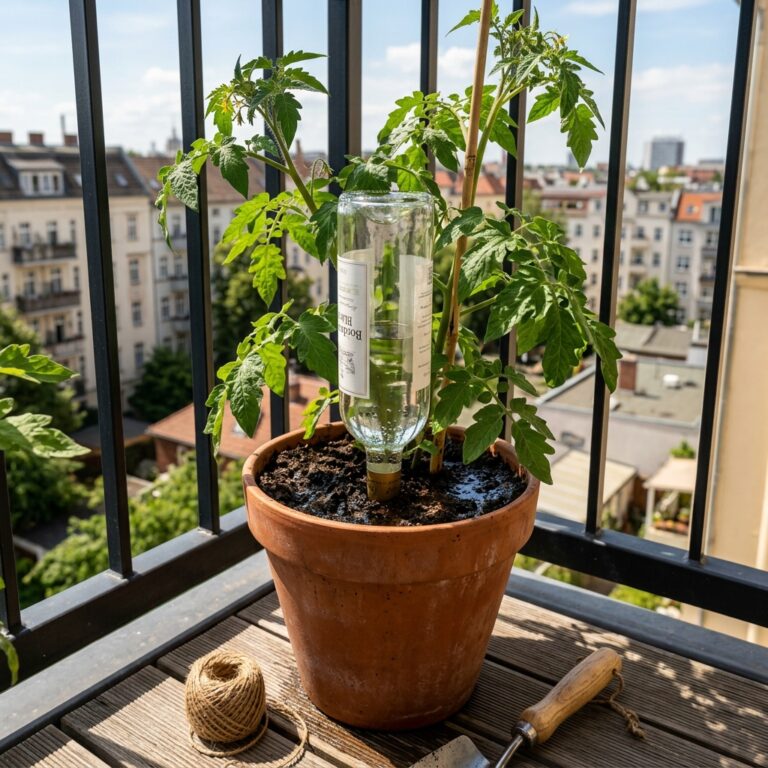
✓ Option B: Low-tech Wasserreserve (wenn du sie hast)
- Self-watering/Reservoir-Systeme oder Docht-Systeme (Modul 2 erwähnt)
- Vorher testen! (nicht erst am Urlaubstag)
✓ Option C: Risiko minimieren
- starke Reduktion der Blattmasse durch Ernte (Salat/Kräuter)
- temporäre Begleiter entfernen (Ein-Topf entlasten)
- Standort etwas geschützter (Wind/Hitze)
Urlaubs-Checkliste (Copy & Paste)
- ☐ 24h vorher: Wassercheck + gründlich giessen wenn trocken
- ☐ Untersetzer: leer / korrekt eingestellt
- ☐ empfindliche Gefässe zusammenstellen
- ☐ temporäre Begleiter geerntet/entfernt
- ☐ wenn 5–7 Tage: Hilfe oder System organisiert
Saisonwechsel
Viele verlieren Motivation im Herbst/Winter, weil sie denken: „Jetzt ist alles vorbei.“ Profis planen in Zyklen.
Frühling/Herbst (kühlere Perioden)
- Blattpflanzen laufen oft stabil (weniger Hitzestress)
- Kräuter wachsen langsamer, aber sind stabil
Hochsommer
- Fokus auf Fruchtpflanzen + hitzestabile Kräuter
- Blattpflanzen eher in Halbschatten oder als Kurzprojekt
Spätsaison: Rückbau & Vorbereitung
- stark verbrauchte Einjahreskulturen entfernen
- Substrat nicht „ewig“ unverändert lassen (je nach Zustand auffrischen)
- Gefässe reinigen (Hygiene)
- Plan: Was kommt als nächstes? (Saisonfenster nutzen)
Indoor-Übergang (optional) – wenn Balkon im Winter schwierig ist
Das ist ein Bonusbereich, aber für Urban Gardening sehr relevant.
Was indoor realistisch ist
- Kräuter in kleineren Mengen (Petersilie, Schnittlauch, evtl. Basilikum bei viel Licht)
- Microgreens/Sprossen (wenn ihr das später als Zusatzmodul wollt)
- „Fensterbank-Ritual“ statt Ernte-Maschine
Hinweis
Indoor ist Licht oft der Engpass – ähnlich wie Schattenbalkon. Erwarte langsameres Wachstum, dafür Kontinuität.
Wenn–Dann“-Regeln (damit du nicht jedes Mal neu nachdenken musst)
Hitze
Wenn mehrere Tage sehr heiss → dann täglich prüfen, evtl. kurzfristig schattieren, gründlich giessen nur wenn trocken.
Wind
Wenn windig → dann häufiger prüfen, Begleiter ausdünnen/ernten, Töpfe stabilisieren.
Regen
Wenn Regen → dann trotzdem Tiefe prüfen (nicht auf Oberfläche verlassen).
Urlaub
Wenn 1–2 Tage weg → dann gründlich giessen + abtropfen lassen.
Wenn 5–7 Tage weg im Sommer → dann Hilfe/System organisieren oder Risiko reduzieren.
Praxisauftrag: Dein Stress- & Saisonplan (Copy & Paste)
Fülle aus:
Mein Balkonprofil:
- Hitze: ☐ niedrig ☐ mittel ☐ hoch
- Wind: ☐ niedrig ☐ mittel ☐ hoch
- Abdeckung: ☐ offen ☐ teilüberdacht ☐ überdacht
Mein Sommerplan (Hitze):
- Ich prüfe: ☐ täglich ☐ alle 2 Tage ☐ 2×/Woche
- Meine Massnahme bei Hitzespitze: ______________________
Mein Windplan:
- Windschutz/Position: _______________________________
- Leit-Töpfe: ________________________________________
Mein Urlaubsplan:
- 1–2 Tage: ________________________________________
- 3–4 Tage: ________________________________________
- 5–7 Tage: ________________________________________
Saison-Reset (Herbst/Winter):
- Was entferne ich: _________________________________
- Was behalte ich (Kräuter): _________________________
- Was mache ich indoor (optional): ____________________
Mini-Zusammenfassung
- Stress kommt durch Wetter: Hitze und Wind verändern Wasserbedarf massiv.
- Erfolgreich ist, wer häufiger prüft, aber nicht blind „mehr giesst“.
- Urlaub ist planbar: Dauer entscheidet, ob Hilfe/System nötig ist.
- Saisonwechsel heisst nicht „Ende“, sondern „Zykluswechsel“.
- Einfache Wenn–Dann-Regeln machen Pflege leicht.